Panel Discussion Photography
How We Photograph a Panel
A panel is the hardest easy assignment on a conference agenda. Shot carelessly, it comes back as four people sitting in a row. The frames worth having catch something else: the gesture mid-argument, the moderator leaning in, and the panelist who is not talking, whose face is doing the most interesting thing on that stage. Here's how a panel gets covered, in the order it happens.
How does Vetter Event Group photograph a panel discussion?
We shoot a panel as a conversation rather than a lineup. Every panel produces three things: a wide of the full panel, individual frames of each panelist, and group frames of them interacting, because a client who only has the wide has nothing usable for a speaker bio. Panelists are photographed only while animated, and the person listening is treated as a real subject, since reactions are usually the most alive faces on the stage.
Your Delivered Gallery
The exchange on stage and the response in the room
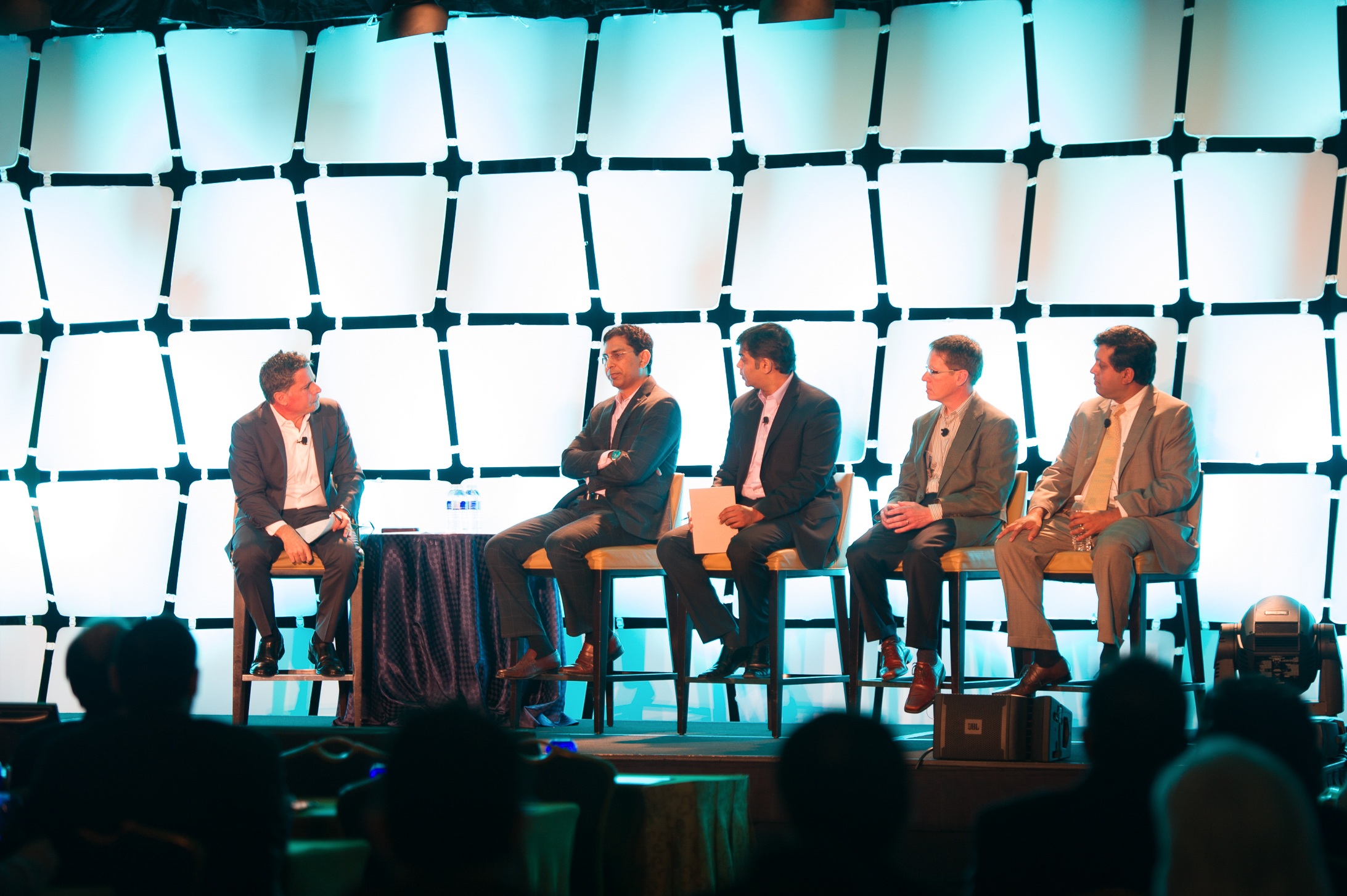
A representative slice of a panel delivery, in the order it lands in your gallery. Not a highlight reel: the room, the full panel, each panelist on their own, the interactions, and the audience, because a panel that only delivers the wide has a hole in it. Click any frame to see it full size.
In the final edit
You should be able to follow the exchange
The strongest panel photographs reveal a conversation: a point made, a response forming, a moderator bringing another voice in. The selection gives each participant room.
- Panelists responding to one another, with both faces readable
- Individual expressions that add something beyond the full-panel view
- A clear view of the complete seated panel
- Audience questions and attentive listening beyond the stage
- Uncluttered framing around microphones, nameplates, and screens
Every voice gets its place in the gallery
- A complete panel wide, individual speakers, and the exchanges between them
- The moderator and listening panelists covered alongside whoever has the microphone
- Enough depth of field to keep the seated row sharp
- LED backdrops checked for banding before the discussion gets underway
- Session names and presenter details photographed for reference later
Before it starts: the room and the nameplate
We get there before the panelists do. Clean frames of the set, the signage, the backdrop, and the seating as designed, plus whatever identifies the session: the room placard, the title slide, and the slide carrying presenter names. That last one is unglamorous and it is what lets your team match a face to a name six months later without guessing. Attendees coming in and finding seats get covered too, because a panel photographed to a full room reads completely differently from one photographed to a thin one.
A seated row is a depth of field problem
Four people in a line are not all the same distance from the camera, and the reflex to open the lens wide for a flattering background will quietly put the panelist on the far end out of focus. Groups get a smaller aperture so every face in the row is sharp. Under bright stage light that costs nothing, which is one of the few gifts a panel gives you. When we do open up, it is for a single panelist, deliberately, because that is the subject shallow focus is actually for.
The three sets every panel has to produce
A panel is not one photograph, it is three groups of them, and they get used in completely different places. The wide of the full panel proves the session happened and goes in the recap. Individual frames of each panelist are what get requested afterward, for speaker bios, social posts, and the thank-you note to someone who flew in for you. And the interaction frames, two panelists turned toward each other mid-exchange, are the ones that make the session look like a conversation instead of a row of chairs. A gallery missing any of the three has a hole in it.
The best face on stage usually is not the one talking
This is the thing that separates a good panel set from a competent one. The speaker is concentrating, and concentrating faces are rarely the most appealing. The panelist listening is reacting: amused, skeptical, nodding, waiting to jump in. We watch the whole row rather than tracking the microphone, which means the frames come back with something happening in them. It is also why we do not shoot in bursts pointed at whoever is currently speaking.
Waiting for the gesture
Panelists get photographed while they are animated: hands moving, leaning forward, making the point rather than setting it up. A person mid-syllable with half-closed eyes is not a photograph of an idea. That means a lot of watching and comparatively little shooting, which is exactly the standard: get the shot and move on rather than filling a card and sorting it out later. Volume is not coverage.
The moderator, who is doing real work
Moderators are routinely left out of panel galleries and they are usually the reason the session worked. They get covered like a panelist: the setup question, the interruption, the laugh they get, the turn toward the audience for questions. If your moderator is a senior person from your own company, these are often the most useful images from the whole session.
Stage light, screens, and the room behind you
Stage lighting is bright and usually flat, so panel frames run at a relatively low ISO while the audience behind you is a completely different exposure, metered for faces. LED walls and screen backdrops flicker at rates that band at common shutter speeds, so shutter speed gets adjusted for those frames specifically. And any text on the backdrop or the lower third gets shot sharp and readable, because a session photograph where the session title is soft is missing the caption.
The audience, and the questions
Reaction frames get covered throughout and weighted toward the start, when the room is fullest and most responsive. The audience question at the end is worth waiting for: somebody standing at a microphone, the panel turned toward them, the room turned with them. It is the only moment in a panel where the whole space is pointed the same direction, and it makes a better wide than the panel alone.
Working without being seen
Panels are working sessions, so the rule is stealth. No crossing projector beams, no moving through sightlines, no becoming audible. All black with quiet shoes and a visible name badge. Panelists are often nervous, and a photographer moving in their eyeline is a genuine disruption rather than a minor one.
An edit that represents the whole panel
We cull hard: no more than two versions of any near-identical image, and no more than three or four following a single exchange. That matters more on a panel than almost anywhere else, since a static stage makes it trivially easy to deliver two hundred nearly identical frames of four seated people. Cards are never wiped on site, and every camera is time-synced to TIME.GOV at call time, so a panel covered by two photographers assembles in true order rather than interleaving wrong.
The Practical Details
Rates, paperwork, and the rest of the program
This page covers how the session gets shot. The commercial and logistical details live where they belong.
Related Services
Explore connected event coverage
Common Questions
Frequently Asked
Will we get usable individual photos of each panelist?
Yes, and it's a defined deliverable rather than a byproduct. Every panel produces three sets: a wide of the full panel, individual frames of each panelist, and interaction frames of them turned toward each other. The individuals are what get requested afterward for speaker bios and thank-you notes, and a gallery without them has a hole in it.
Everyone is sitting in a row. Will the person on the end be in focus?
Yes. A seated row is a depth of field problem, because those four people aren't the same distance from the camera. Groups get a smaller aperture so every face is sharp, which under bright stage light costs nothing. Shallow focus is saved for deliberate single-panelist frames.
How do you keep panel photos from looking static?
By not tracking the microphone. The most alive face on a panel is usually the person listening rather than the person talking, so we watch the whole row and wait for the gesture, the lean-in, the reaction. Panelists get photographed while animated, not mid-syllable, which means more watching and less shooting.
Do you photograph the moderator?
Yes, and they're routinely left out of panel galleries elsewhere. Moderators get covered like a panelist: the setup question, the interruption, the laugh, the turn to the audience. If your moderator is senior at your own company, those are often the most useful frames from the session.
There's an LED wall behind the panel. Will it band?
Not if the shutter speed is set for it. LED walls and screens flicker at rates that band at common shutter speeds, so shutter speed gets adjusted for those frames specifically. Any text on the backdrop is also shot sharp and readable, since a session photo where the title is soft is missing its caption.
Can you capture the audience Q and A?
Yes, and it's worth waiting for. Someone standing at a microphone with the panel turned toward them is the only moment in a session where the whole room points the same direction, and it makes a stronger wide than the panel by itself.
How do you make sure we can tell which session a photo came from?
Something identifying the session gets shot at its start: the room placard, the signage, or the title slide, plus any slide carrying presenter names. It's unglamorous and it's what lets your team match a face to a name months later without guessing.
How many photos should we expect from one panel?
Fewer than an unedited shoot would give you, deliberately. A static stage makes it trivial to deliver two hundred near-identical frames of four seated people, so we cull hard: no more than two versions of any near-identical image and no more than three or four following a single exchange. Judicious selection is the standard.
Let's Scope Your Event
Tell us what you're planning and we'll respond within 24 hours with the next best step.
Get a Quote