Offsite & Excursion Photography
How We Photograph an Offsite
An offsite is the only event on your calendar that moves. It starts on a bus, passes through three venues and four lighting situations, and ends somewhere with a view. What makes it worth the trouble is that offsites produce the warmest photographs your company will take all year, because people behave differently once they are somewhere else. Here's how the day gets covered, in the order it happens.
How does Vetter Event Group photograph a company offsite or hospitality excursion?
We treat an offsite as a series of locations rather than one event. White balance and exposure are reset at every stop, because a barrel room, a terrace at noon, and a dinner under string lights share nothing. People are placed in the scene with the destination visible behind them, since context is most of what makes an offsite photograph worth having, and group photos get taken at the scenic stops while the light is good rather than left to the end of the day.
Your Delivered Gallery
A day away, with the people and place together
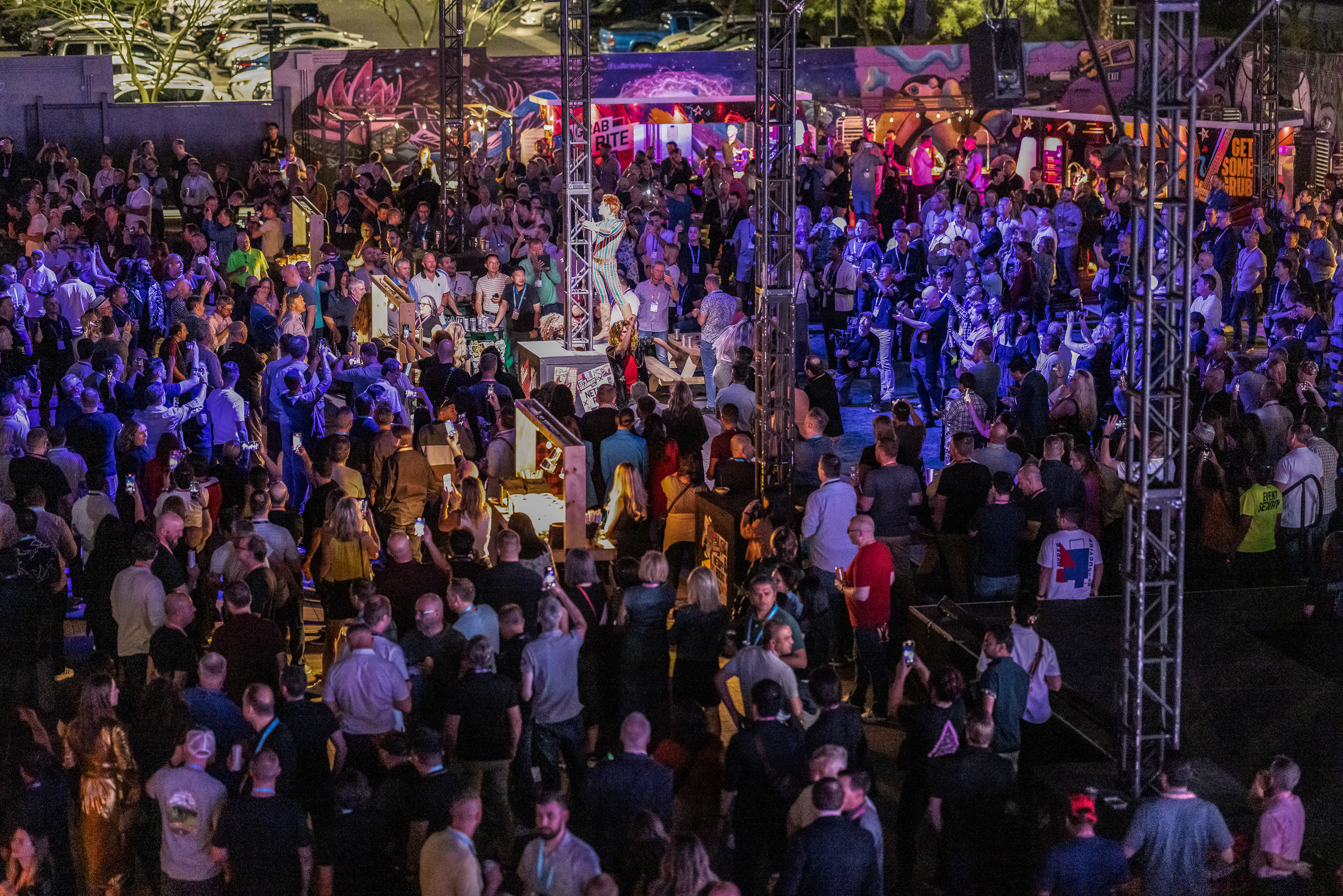
A representative slice of an offsite delivery, in the order the day happened. Not a highlight reel: the arrival, each location established, the activities, the conversations in between, and the light at the end, because that whole range is what you actually receive. Click any frame to see it full size.
In the final edit
You should recognize the journey
Place is part of the reason for an offsite. We select photographs that connect the team to each destination and keep the quieter transitions alongside the planned activities.
- A clear sense of place at each venue or outdoor stop
- Colleagues visibly participating in the activity
- Relaxed exchanges during travel and breaks
- Group photographs with clear faces and an uncluttered backdrop
- Details of the experience, from a tasting to the view at sunset
One day, several places, a coherent gallery
- An establishing photograph at each stop to orient the viewer
- Group photos planned for scenic stops while the light is good
- Travel and the conversations between activities included in the coverage
- People framed with the destination around them
- Exposure and color reset as the group moves between locations
- Cameras time-synced so coverage across venues comes back in order
The day starts before the bus does
Arrivals, the coffee line, the name tags, the first conversations in a parking lot at seven in the morning. These frames are unglamorous and they anchor the whole set, because they are the only ones that show the day beginning. An offsite gallery that opens at the first venue feels like it started in the middle.
Every stop is a new lighting problem
This is the defining technical fact of an offsite. A coach interior, a barrel room, a terrace at noon, a tasting under a canopy, a dinner under string lights: four or five completely different color temperatures and light levels in one day, and nothing you set in the morning survives to the afternoon. White balance gets set by hand at every location rather than left on auto, exposure is reset for the new conditions, and faces stay the priority while backgrounds are allowed to go bright. It is more setup work than any other format asks for, and skipping it is why offsite galleries so often look like they were shot by different people.
Establishing frames, because place is the point
Nobody books an offsite to be in a room. They book it to be somewhere, so every location gets an establishing frame: the exterior, the view, the vineyard, the coastline, the building your group just walked into. Without them a viewer cannot tell a Napa barrel room from a hotel basement, and the entire premise of the day is lost. These are also the frames that sell next year's offsite internally.
Context in every frame that can carry it
Beyond the establishing shots, people get placed in the scene rather than shot tight against nothing. A tight shot with no context is half a photograph, and at an offsite it is worse than that: it throws away the location you spent the budget on. Groups get framed with the view behind them, conversations get the room or the landscape around them, and details get shot with enough surroundings to make the setting apparent.
Group photos while the light is good
The full group photo is the single most requested image from any offsite, and it is routinely left until the end of the day when everyone is tired and the light has gone. We take it at the right stop rather than the last one: clean uncluttered background, even spacing so nobody is half hidden, a smaller aperture so the back row is as sharp as the front, and multiple frames of every grouping checked for closed eyes. Smaller team and department groupings get the same treatment through the day.
The moments between the activities
Offsites are mostly transitions, and the transitions are where people relax. Two colleagues talking on a bus, somebody laughing at the back of a walking tour, the group spread out across a lawn between sessions. These are the frames that make an offsite gallery feel like a day rather than an itinerary of stops. Two people in frame means both faces sharp, because a conversation only draws a viewer in if they can read both of them.
Activities, tastings, and whatever the day is built around
Whether it is a tasting, a cooking class, a hike, a boat, or a team competition, the coverage is the same in shape: wide with people visibly enjoying it, tight on the hands and the detail, and faces reacting. What we avoid is the posed-in-a-line version of an activity, because it turns something people genuinely enjoyed into a compliance photo. Food and drink get shot fresh and full, never picked over, and nobody is photographed mid-bite.
Golden hour, which happens once
Most offsites end somewhere with a view at the best hour of the day, and that light lasts about twenty minutes. We plan the day's remaining must-haves around it rather than discovering it has passed. If a group photo or a hero frame of the venue is on the list, that is when it happens.
Working a day that does not stop
Practically, an offsite means carrying everything for a full day with no base to return to: two bodies, backup batteries for everything, cards for the whole day, and no opportunity to swap gear. Cards are never wiped on site, each camera runs two of them, and the backup copy stays intact until delivery. When more than one photographer covers a day that splits into groups, every camera photographs TIME.GOV at call time so the whole day reassembles in true chronological order across venues.
The whole day, without the repetition
We do not overshoot, because volume is not coverage and a long day makes it very easy to come back with thousands of frames. In post we cull hard: no more than two versions of any near-identical image and no more than three or four following a single moment. What comes back is a day someone can travel through, from the parking lot at seven to the view at sunset, which is exactly the shape the day actually had.
The Practical Details
Rates, paperwork, and related coverage
This page covers how the day gets shot. The commercial and logistical details live where they belong.
Related Services
Explore connected event coverage
Common Questions
Frequently Asked
We're visiting four venues in one day. Will the photos look consistent?
Yes, because the work happens at every stop rather than once in the morning. White balance is set by hand at each location and exposure is reset for the new conditions. A coach, a barrel room, a terrace at noon, and a dinner under string lights are completely different lighting situations, and nothing you set at the first one survives to the last.
Will people be able to tell where we were?
That's the whole point of an offsite gallery, so every location gets an establishing frame and people are placed in the scene with the destination behind them. Without that a viewer can't tell a Napa barrel room from a hotel basement, and the premise of the day is lost.
When do you take the full group photo?
At the right stop, while the light is still good, rather than at the end of the day when everyone is tired. Clean background, even spacing, a smaller aperture so the back row is as sharp as the front, and multiple frames checked for closed eyes. It's the most requested image from any offsite, so it doesn't get left to chance.
Do you cover the travel between locations?
Yes, and it's some of the best material. Offsites are mostly transitions, and transitions are where people relax: two colleagues talking on a bus, somebody laughing at the back of a walking tour. Those frames are what make the gallery feel like a day rather than an itinerary.
Will you photograph the activity itself?
Yes, three ways: wide with people visibly enjoying it, tight on the hands and the detail, and faces reacting. What we avoid is the posed-in-a-line version, which turns something people genuinely enjoyed into a compliance photo.
Our day ends outdoors at sunset. Can you use that?
We plan around it. That light lasts about twenty minutes, so any remaining must-haves, a group photo or a hero frame of the venue, get scheduled into it rather than discovered after it's gone.
The group splits into different activities. Can you cover both?
With more than one photographer, yes. Every camera photographs TIME.GOV at call time so the bodies are time-synced, and a day that splits into groups across venues reassembles into one true chronological set rather than separate piles.
It's a long day with no home base. Is that a problem?
No, it's planned for. Two bodies per photographer, backup batteries for everything, and enough cards for the full day, since there's no opportunity to swap gear mid-excursion. Cards are never wiped on site and each camera carries a backup copy until delivery.
Let's Scope Your Event
Tell us what you're planning and we'll respond within 24 hours with the next best step.
Get a Quote