Holiday Party Photography
How We Photograph a Holiday Party
A holiday party is the one night of the year your company sees itself as a group of people rather than an org chart. Nobody is being sold to, and the agenda is two minutes long. That makes for different pictures: warmer, looser, and full of faces your team will recognize. Here's how that night gets covered, in the order it happens.
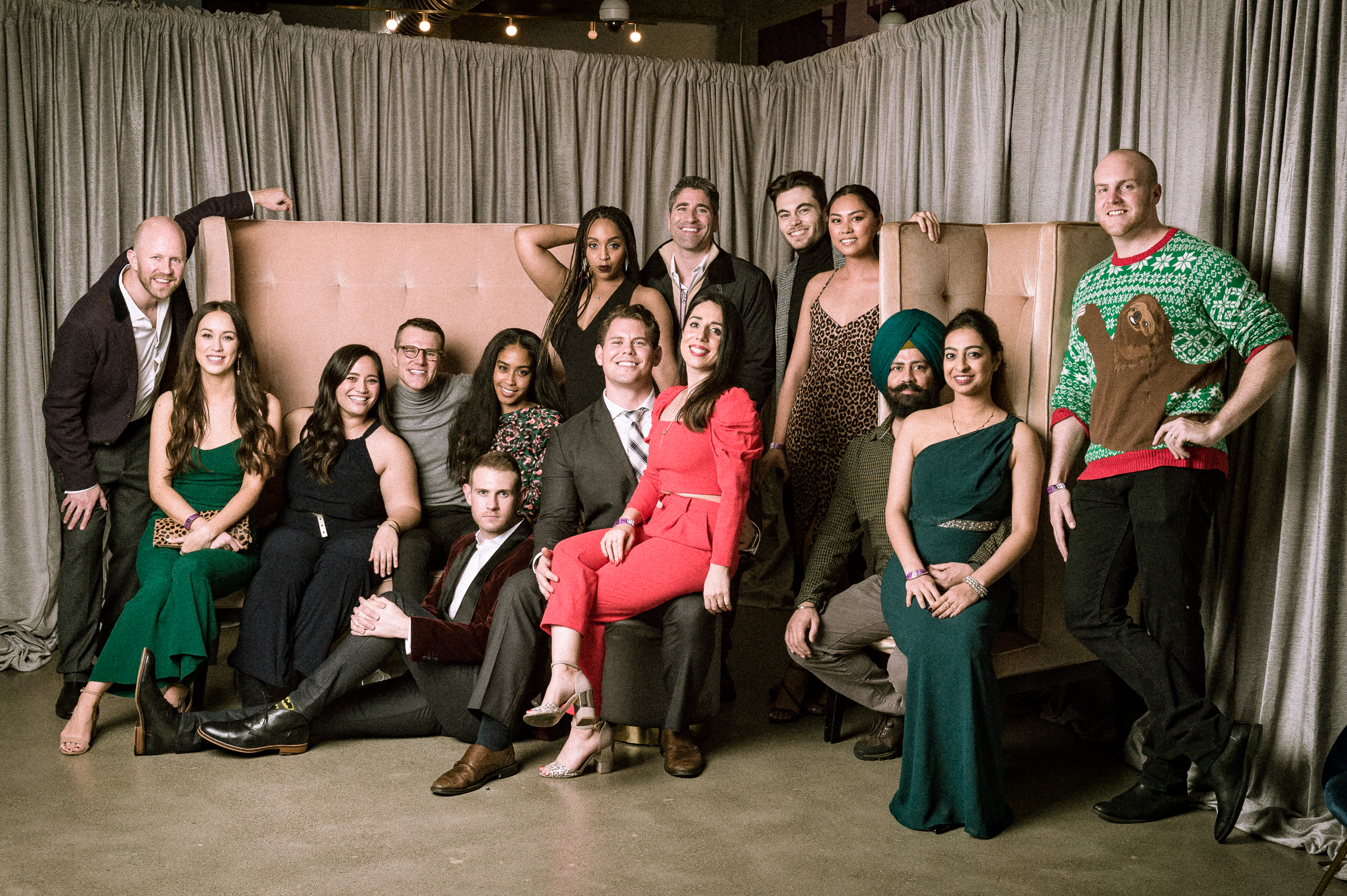
How does Vetter Event Group photograph a corporate holiday party?
We photograph holiday parties around the people rather than a program, because there usually isn't much of one. Group photos are treated as a primary deliverable: clean backgrounds, even spacing, and multiple frames of every grouping so nobody is blinking in the one that gets printed. Holiday venues are lit with string lights, candles, and colored uplighting, beautiful and hostile to a camera, so exposure is set for faces while the lights stay atmosphere. And discretion is a standing rule: nothing compromising gets captured, and nothing compromising gets shared.
Your Delivered Gallery
Team photos and a night worth remembering
A representative slice of a holiday party delivery, in the order it lands in your gallery. Not a highlight reel: the room, the team photos everyone asks for, the candids between them, the food, and the back half of the night, because that whole range is what you actually receive. Click any frame to see it full size.
In the final edit
The people make it a holiday party
Decor sets the scene, but the photographs people return to are of their colleagues together. We balance team portraits with laughter, shared activities, and the celebration around them.
- Groups that look relaxed and pleased to be together
- Candid laughter and reactions during games and entertainment
- Seasonal details and lighting that establish the occasion
- Dance-floor photographs that celebrate guests at their best
Photographs your team will want to keep
- Team and colleague group photos treated as a central part of the coverage
- Sharp eyes and multiple frames of each group to catch everyone at their best
- Festive lighting preserved while keeping skin tones natural
- Candids, games, and dancing covered alongside the posed photographs
- Guest dignity protected during the party and in the final edit
Before doors: the room your team pulled off
Somebody on your team spent weeks on this room, and it exists in finished condition for about fifteen minutes. Clean wide frames, the table settings, the lighting, the tree or the installation or whatever the centerpiece is this year, and the signage. Details get shot wide, medium, and macro with distractions taken out of frame. This is also when white balance gets set by hand for each area, which matters more at a holiday party than almost anywhere else, because the room is about to be lit by four different warm sources at once.
Arrivals: everyone cleans up
There's a specific pleasure in a holiday party that no other corporate event has, which is seeing the people you work with every day looking completely different. People make an effort for this one. Arrivals get covered while that effort is still intact, and those frames tend to be the ones guests want for themselves, which is a good sign about a photograph: it means somebody is glad to be in it.
The one event where people want the camera
At a conference we stay invisible and don't ask anyone to look at a lens until late in the evening. A holiday party inverts that completely. Your employees want a photograph with their team, with the friend they only see on the third floor, with the manager they actually like, and if nobody offers to take it they leave slightly disappointed. So we ask. Camera-aware coverage is a primary deliverable here, worked through the evening rather than saved for the end, and it sits alongside the candid coverage instead of replacing it.
Team photos, done so they survive the year
A group photo is easy to take and easy to get wrong. Clean, uncluttered backgrounds, even spacing so nobody is half hidden behind a shoulder, a smaller aperture so the person in the back row is as sharp as the person in front, and multiple frames of every single grouping, checked on the night for closed eyes and expressions. These photos end up on desks, in Slack, and in the deck at the January all-hands. One blink nobody caught is the difference between a photo a team keeps and one they quietly don't use.
Holiday light is gorgeous and technically hostile
String lights, candles on the tables, colored uplighting, a tree, and a dim room. It looks wonderful in person and it's one of the harder rooms in the calendar to photograph, because those sources are all different colors and none of them are actually lighting anybody's face. White balance gets set by hand rather than left on auto, exposure is set for faces and backgrounds are allowed to go bright, and flash goes on bounced or modified when the room needs it, for accurate skin and for catchlights. Used carelessly, flash turns every string light in the background into a dull dot and the room stops looking like the room. Used properly, the lights stay as atmosphere and the people in front of them still look like themselves.
The candids in between
The posed frames are the ones people ask for. The candid frames are the ones that turn out to matter, and they're where most of the evening goes: two colleagues genuinely laughing, the table that will not stop talking, someone's face during the toast. Two people in frame means both faces sharp, because a conversation only draws a viewer in if they can read both of them, and people get placed in the scene with the room around them, since a tight shot with no context is half a photograph.
The toast, the awards, the two minutes of program
Most holiday parties have one short moment that matters: a founder's toast, service anniversaries, an award for someone who had a big year. It's brief and it isn't going to be repeated, so we're in position before it starts rather than moving toward it. Speakers get shot while animated and gesturing, and the reaction in the room gets covered alongside them, because the point of a service award is the face of the person receiving it and the table that cheers for them.
Dinner, dessert, and the food rules
Displays get photographed fresh and full, never picked over and never from the prep side. Nobody is photographed actively eating, at any point in the night: holding a plate is fine, chewing is not, and it's the fastest way to make a guest dislike a photo of themselves. Table interactions get covered with a long lens from a respectful distance, so a table looks like a table rather than eight people looking up at a camera.
The dance floor and the back half of the night
Once the dancing starts the room stops being a corporate event and starts being a party, and the frames change accordingly: faster shutter speeds to hold the action sharp, wide frames that show a full floor, and tight frames on the people genuinely having the best time. Entertainment gets covered from where the guests stand, wide with the room enjoying it, then tight on the action, and then we move on. The story is your people's night, not the band's.
Discretion, on the night and in the edit
A holiday party is a night when people relax, and it gets photographed by people who understand what that means. Nothing compromising is captured, and nothing compromising is shared. That's a standing rule rather than a judgment call made at midnight: we choose deliberately what deserves a frame, flash is never pointed at a face so people look like themselves instead of like a checkpoint photo, nobody is photographed mid-bite, and the cull afterward is aggressive. The practical test is simple. The set you get back should be one you can send to your entire company without screening it first.
A celebration your team can revisit
We don't overshoot, because volume is not coverage. In post we cull hard: no more than two versions of any near-identical image, and no more than three or four following one moment. Cards are never wiped on site, each camera runs two, and the backup copy stays intact until delivery. With more than one photographer, every camera shoots TIME.GOV at call time so the bodies are time-synced and the set assembles in true chronological order. What comes back is the evening in sequence, from the room nobody had walked into yet through to the part of the night people will be talking about in January.
The Practical Details
Rates, paperwork, and related coverage
This page covers how the evening gets photographed. The commercial and logistical details live where they belong.
Related Services
Explore connected event coverage
Common Questions
Frequently Asked
Everyone wants a photo with their team. Can you do that and still get candids?
Yes, and the group photos are a stated deliverable rather than something squeezed in. A holiday party is the one corporate event where people actively want the camera, so we ask rather than waiting to be asked, and we work the groupings through the evening instead of stacking them at the end. The candid coverage runs alongside it, and it's still where most of the night goes.
Our party goes late and people loosen up. How do you handle that?
With discretion, as a standing rule rather than a judgment call at midnight. Nothing compromising is captured, and nothing compromising is shared. Judicious selection is our standard on every event, and at a holiday party it does specific work: we choose deliberately what deserves a frame, and the cull afterward is aggressive. The test we hold ourselves to is that the delivered set is one you could send to your whole company without screening it first.
Our venue is lit with string lights and candles. Will the photos look muddy?
Not if the room is handled properly. Those sources are all different colors and none of them are really lighting faces, so white balance gets set by hand per area rather than left on auto, and exposure is set for faces while backgrounds go bright. Where flash is needed it's bounced or modified, never pointed at anyone, which keeps the string lights reading as atmosphere instead of flattening them into dots.
Will people have their eyes closed in the team photo?
Not if we shot it correctly. Every grouping gets multiple frames, checked on the night for closed eyes and expressions, with a clean background and even spacing so nobody is half hidden. A smaller aperture keeps the back row as sharp as the front. This is the photograph most likely to end up on a desk, so it gets treated like it matters.
Can we use these photos for recruiting and internal communications?
That's most of what they're for, and it shapes how they're shot. A recruiting photo works when people look like themselves and the room reads full and warm, which is why we don't point flash at faces, why we hold wide frames until the room has filled, and why we cull hard. Usage rights are covered in our standard engagements, and the details are on the working-with-us page.
Do you photograph the dance floor?
Yes, and it's shot for the energy rather than as documentation. Faster shutter speeds hold the movement sharp, wide frames show a full floor, and tighter frames find the people genuinely enjoying themselves. A half-empty dance floor doesn't get photographed wide, for the same reason a half-empty room doesn't.
We have a short toast and service awards. Will you catch them?
Yes, and we'll be in position before they start. A two-minute toast and a service anniversary are the least repeatable moments of the night, so we ask about them in planning rather than discovering them when the microphone comes on. Speakers get shot while animated, and the reaction in the room gets covered alongside them, because the face of the person receiving the award is the actual photograph.
Will your photographer be in the way all night?
No. The team wears all black with quiet shoes and a visible name badge, stays out of sightlines, and works candid between the group photos. The difference at a holiday party is that people are pleased to see the camera when it does come over, so the moments where we're visible are moments guests are actively enjoying rather than tolerating.
Add-on
NOW Gallery (Event Experience)
During the party, photos can publish to a branded gallery within a few minutes. Guests tap Find Me and use a selfie to see only photos of themselves, or use a private QR with no selfie required. $200/hour per photographer shooting, an add-on to standard coverage.
Learn more / NOW GalleryLet's Connect
Date, venue, and headcount if you have them. We will reply within 24 hours.
Prefer to talk or text? 628-899-1530
Book a time on the calendar