After Party & Concert Photography
How We Photograph an After Party
The after party is the loosest, darkest, fastest room of the entire program, and usually the one people talk about afterward. It is also the easiest to get badly wrong: too much flash and a room that felt electric comes back looking like a checkpoint. Here's how it gets covered, in the order it happens.
How does Vetter Event Group photograph a conference after party or concert?
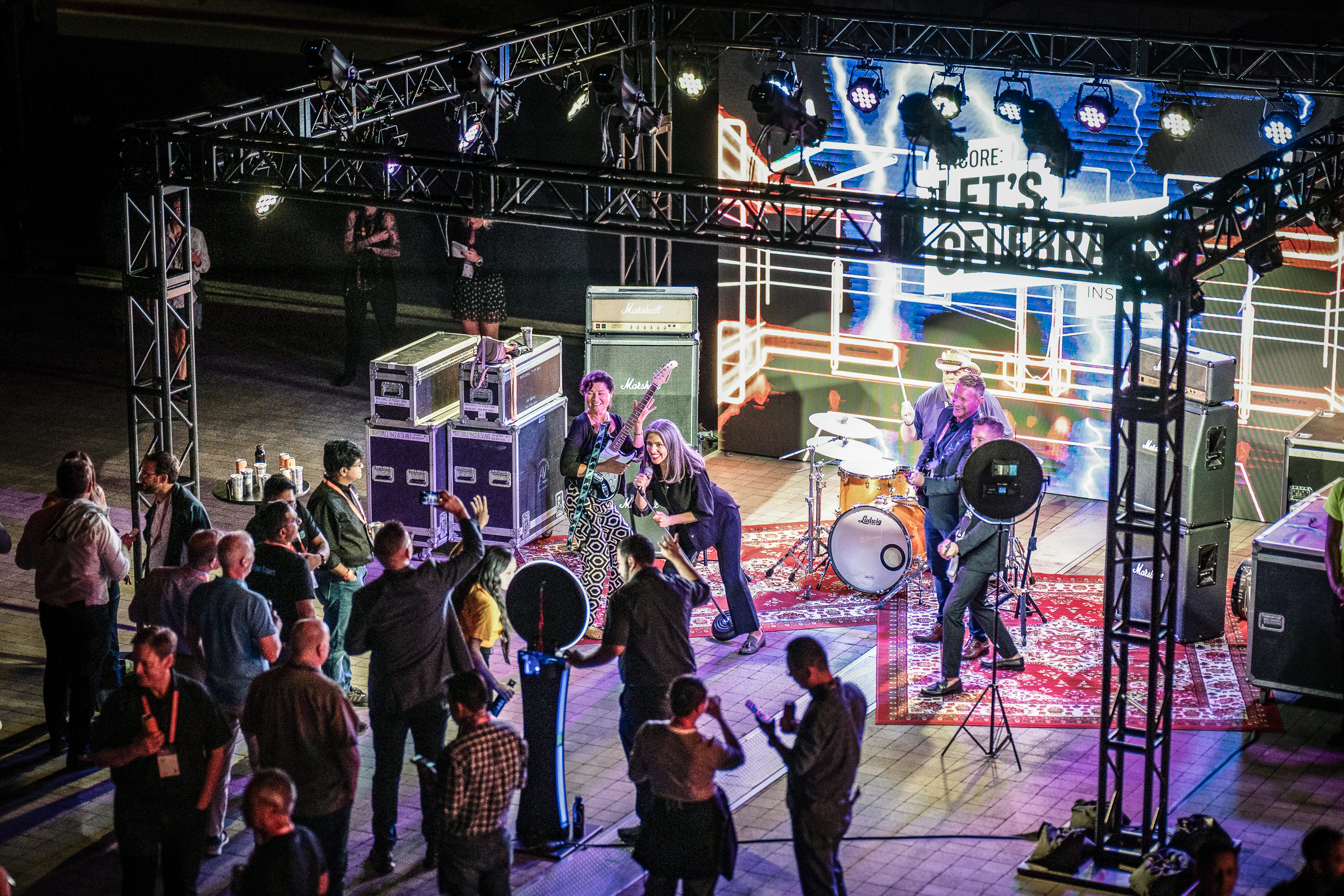
We shoot after parties for energy while protecting the look of the room. White balance is set by hand for saturated stage and club lighting, faster shutter speeds hold the action sharp, and flash is never pointed at a face, so the lighting design reads as atmosphere. Entertainment is covered wide with the crowd visibly enjoying it and tight on the action, then we move on. And discretion is a standing rule: nothing compromising gets captured, and nothing compromising gets shared.
Your Delivered Gallery
The energy after the main program ends
A representative slice of an after party delivery, in the order it lands in your gallery. Not a highlight reel: the room and the rig before doors, the crowd building, the act, the floor at full tilt, and the details, because that whole range is what you actually receive. Click any frame to see it full size.
In the final edit
Energy you can see in the faces
A dark room and bright lights are only the setting. The final selection centers the guests enjoying the party, with enough performance and production detail to bring the night back.
- Expressions and movement that show guests enjoying themselves
- Performers in context with the crowd responding
- Clean faces within the color and light of the venue
- A mix of full-floor views and close action, without repetitive performance frames
Keep the energy and the atmosphere
- The crowd and the act photographed together before moving in for performance detail
- Shutter speeds chosen to keep movement sharp on a dark floor
- Saturated club lighting balanced so guests still look like themselves
- Wide dance-floor photographs held until the party has filled out
- Discretion during coverage and selection, with no compromising images captured or shared
Before the doors: the room and the rig
The production build at an after party is often the most impressive thing your team commissioned all week, and it is only clean before anyone walks in. Wide frames of the space, the stage and lighting rig, the bar, the signage, and any installation. Details get shot wide, medium, and macro with any text sharp and readable. This is also when white balance gets set per area and the stage lighting gets checked, because a club-lit room is the last place you want to be figuring out color for the first time.
A dark room is a shutter speed problem before it is a light problem
People move at an after party. They dance, they gesture, they turn toward each other mid-laugh, and a shutter speed chosen for a seated dinner will turn all of it to mush. Action frames run fast enough to hold movement sharp, which pushes ISO up, which is fine: our standard sets a working ceiling high enough to shoot these rooms honestly. A slightly grainy frame that is sharp beats a clean frame that is smeared, every time.
Saturated light, kept the way it looked
After party lighting is deliberately extreme: deep magenta washes, moving heads, LED walls, haze. Auto white balance panics in a room like that. Ours is set by hand per area, and flash is used to overpower saturated ambient only where color has gone genuinely unusable, always bounced or modified and never pointed at anyone. The goal is that the photographs look the way the room felt, which is the entire reason a client hires a lighting designer.
Screens, walls, and the banding problem
LED walls and video screens flicker at rates that produce banding at common shutter speeds, and after parties are full of them. Shutter speed gets adjusted for those frames specifically, which is a known condition we plan for rather than something discovered in the edit. Any text on a branded backdrop gets shot sharp and readable, because a photograph where the sponsor's name is soft is not a photograph of the sponsor.
The floor, once it is full
A half-empty dance floor does not get photographed wide, for the same reason a half-empty room does not. Early coverage goes to arrivals, the bar, the installations, and the first groups finding each other. The wide frames of a packed floor wait until the floor is packed, and they are worth waiting for: that image is the one that proves the night worked.
The act, and the room watching it
Entertainment gets covered two ways: wide with guests visibly enjoying it, because the story is your crowd's night rather than the performer's, and tight on the action for the energy. Then we move on. A gallery where forty percent of the frames are the same guitarist is a gallery your marketing team has to dig through, and it tells the wrong story about whose event it was.
The people, not the shapes
In a dark room it is easy to deliver silhouettes and call them atmospheric. Exposure is set for faces and backgrounds are allowed to go bright, so the people in your photographs are recognizable people. Two in frame means both faces sharp. And subjects get placed in the scene with the lighting and the crowd behind them, because a tight shot with no context is half a photograph, and context is what makes a viewer feel the size of the room.
Discretion, on the night and in the edit
An after party is where people relax hardest, and it gets photographed by people who understand what that means. Nothing compromising is captured, and nothing compromising is shared. That is a standing rule rather than a judgment call made at one in the morning: we choose deliberately what deserves a frame, flash never goes in anyone's face, and the cull afterward is aggressive. The practical test is that the delivered set is one you could send to your whole attendee list without screening it first.
Branding that survives a dark room
Sponsors pay for after parties and then receive nothing usable from them, because branded coverage in a dark room takes deliberate work. It runs on four framings: a clean closeup of the branded item in good light, a wide placing it in the room, the branded item with engaged guests behind it, and engaged guests with the branding behind them. The last two are the ones a sponsorship team can actually use, and they only exist once the room is full.
A tight edit of a high-energy night
We do not overshoot, because volume is not coverage. In post we cull hard: no more than two versions of any near-identical image and no more than three or four following one moment on the floor. Cards are never wiped on site, each camera runs two, and every camera is time-synced to TIME.GOV at call time, so a party covered by two photographers assembles in true order. What comes back is a night in sequence, ending where the night ended.
The Practical Details
Rates, paperwork, and related coverage
This page covers how the room gets shot. The commercial and logistical details live where they belong.
Related Services
Explore connected event coverage
Common Questions
Frequently Asked
The venue is very dark. Will the photos just be silhouettes?
No. Exposure is set for faces and backgrounds are allowed to go bright, so the people in your photographs are recognizable people rather than shapes. Where the room is too dark or too saturated to hold clean color, flash goes on bounced or modified, never pointed at anyone.
Will flash ruin the lighting design we paid for?
Not the way we use it. Flash is bounced or modified and used only where saturated ambient light has made color genuinely unusable. The goal is photographs that look the way the room felt, which is the entire reason you hired a lighting designer.
People will be dancing. Will the shots be blurry?
No. Action frames run at faster shutter speeds to hold movement sharp, which pushes ISO up, and that's the right trade. A slightly grainy frame that's sharp beats a clean frame that's smeared, every time.
There are LED walls everywhere. Will they band?
Not if the shutter speed is set for them. LED walls and screens flicker at rates that band at common shutter speeds, so shutter speed gets adjusted for those frames specifically. Any text on a branded backdrop is shot sharp and readable.
People will be drinking and letting loose. How do you handle that?
With discretion, as a standing rule rather than a judgment call at one in the morning. Nothing compromising is captured, and nothing compromising is shared. We choose deliberately what deserves a frame and the cull afterward is aggressive. The test we hold ourselves to is that the delivered set is one you could send to your whole attendee list without screening it first.
Can you get a good shot of the full dance floor?
Yes, once it's full. A half-empty floor doesn't get photographed wide, for the same reason a half-empty room doesn't. Early coverage goes to arrivals, the bar, and the installations, and the packed-floor wides wait. That image is the one that proves the night worked.
Our sponsor is funding the party. What will they get?
Branded coverage on four distinct framings: a clean closeup of the branded item, a wide placing it in the room, the item with engaged guests behind it, and engaged guests with the branding behind them. The last two are what a sponsorship team can actually use, and they only exist once the room fills.
How much of the band should we expect in the gallery?
Enough, and not more. Entertainment gets covered wide with the crowd enjoying it and tight on the action, then we move on. A gallery where forty percent of the frames are the same guitarist tells the wrong story about whose event it was.
Let's Scope Your Event
Tell us what you're planning and we'll respond within 24 hours with the next best step.
Get a Quote