Executive Breakfast & Lunch Photography
How We Photograph an Executive Breakfast
An executive breakfast is a small room full of senior people who agreed to give you an hour before their day starts. The photography has to be close enough to show real conversation and invisible enough that the conversation keeps happening. That balance is the entire assignment. Here's how the morning gets covered, in the order it happens.
How does Vetter Event Group photograph an executive breakfast or hosted lunch?
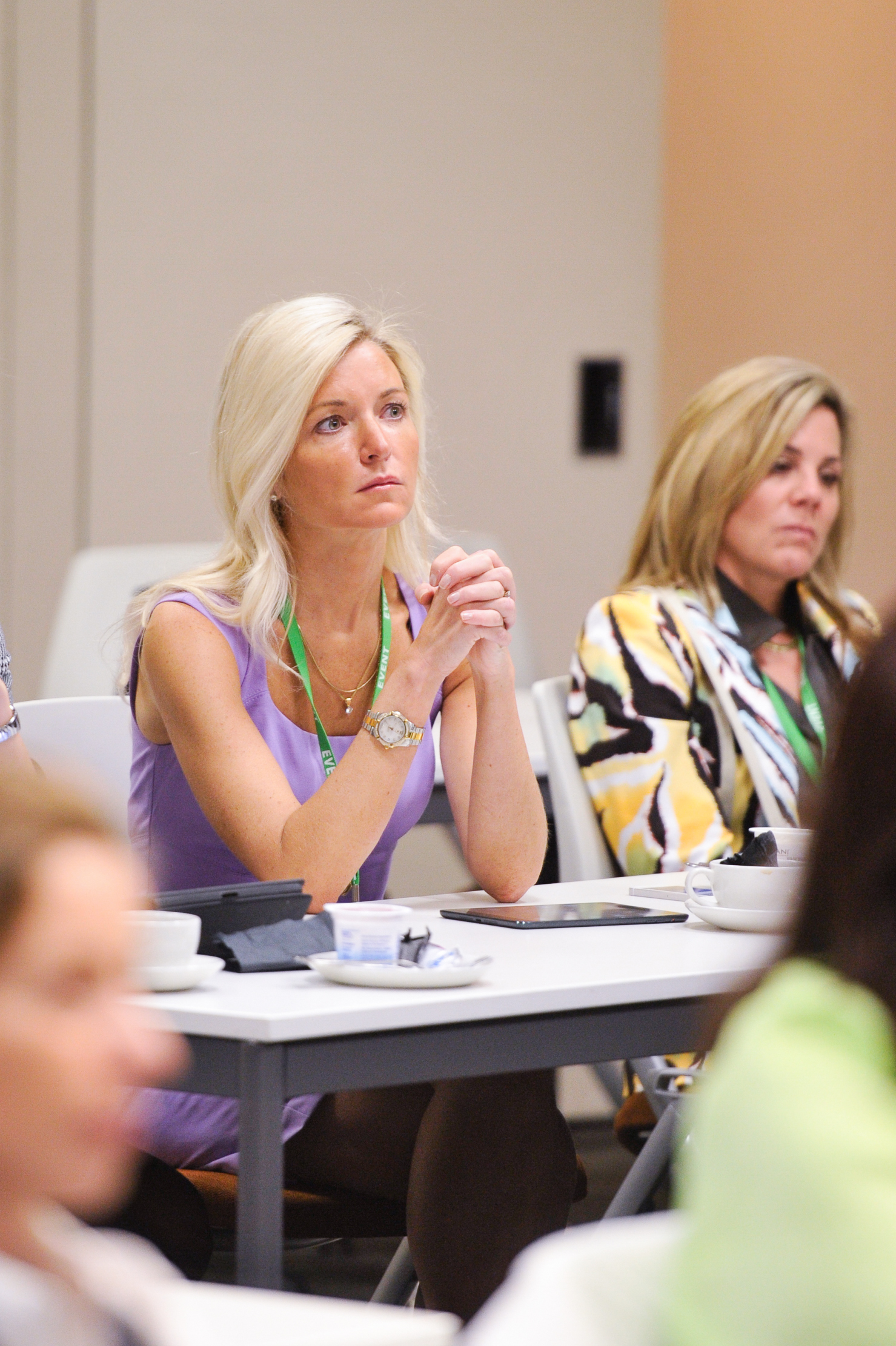
We work small senior rooms quietly and from a distance, using a long lens for table conversations so the room is never crowded by a photographer. Morning venues usually have real window light, which we use in preference to flash, and nobody is photographed actively eating. The clean room, the table settings, and the branding get shot before guests arrive, since a hosted meal room only looks composed once.
Your Delivered Gallery
The morning gathering, from coffee to conversation
A representative slice of a hosted breakfast delivery, in the order it lands in your gallery. Not a highlight reel: the composed room, the arrivals, the conversations, the remarks, and the details, because that whole range is what you actually receive. Click any frame to see it full size.
In the final edit
Attention, without interruption
At a hosted breakfast, a small exchange can matter more than a room-wide photograph. The edit favors engaged faces, natural light, and the details of the host experience.
- Both participants clearly in focus during a table conversation
- Faces exposed for the people, even against bright windows
- Host remarks and the guests listening to them
- Composed place settings and fresh breakfast service
Quiet coverage for a smaller room
- Table conversations photographed from a respectful distance with a long lens
- Available window light used wherever the room allows it
- Settings, host branding, and room details covered before guests arrive
- Photographs timed around conversation and remarks, never active eating
- Discreet working practices suited to senior guests and NDA environments
Before guests: the room while it is composed
A hosted meal room is arranged once and never looks that way again. Clean wide frames of the space, the table settings, the place cards, the branding on the menu or the step-and-repeat, and any signage. Details get shot wide, medium, and macro with distractions taken out of frame and any text sharp and readable. This is also when white balance gets set by hand for the room, which matters at breakfast because you are usually mixing warm interior lighting with cold morning daylight coming through a wall of glass.
Morning light is the best light you will get all program
Breakfast rooms tend to have windows, and window light on a face is better than anything we can carry. We look for it deliberately: seats near the glass, rim light along a shoulder, the soft even light that makes people look like themselves rather than lit. Exposure is set for faces and the windows are allowed to blow out, because a bright background is a fair trade and a dark face never recovers. Flash stays in the bag unless the room genuinely needs it, and when it comes out it is bounced or modified and never pointed at anyone.
Arrivals, which are where the handshakes are
The first fifteen minutes of a breakfast produce a disproportionate share of the usable frames: people arriving, finding their name card, greeting someone they have only emailed, the host working the room. Once everyone is seated and eating, a hosted meal becomes visually static very quickly. Weighting coverage toward arrivals is not a shortcut, it is where the photographs are.
The long lens, and why we stay back
Table conversations get covered from a distance with a long lens rather than by standing over the table. That produces two things at once: a natural frame, because nobody adjusts their posture for a photographer they have not noticed, and an undisturbed room, because senior people talking candidly are the entire reason this event exists. Standing close and shooting wide is faster and it changes the room. We do not do it.
Nobody gets photographed mid-bite
This is a hosted meal, so the rule matters more here than almost anywhere. Holding a cup or a fork is fine, chewing is not, and we keep food out of frame where we can. Food displays get photographed fresh and full, before service picks them over, and never from the prep side. Where servers appear they are shown engaged in the work rather than looking at the lens. A room of executives caught mid-meal is the fastest way to produce a gallery your client will not use.
The conversation, and both faces in it
The frame worth having at a breakfast is two people genuinely in an exchange, and it only works if the viewer can read both of them. Depth of field closes down the moment a second face enters the frame, no exceptions, and the closest person to the camera is always sharp. Shallow focus is saved for a single subject, which at a breakfast usually means the person listening intently across the table. People get placed in the scene with the room around them, because a tight shot with no context is half a photograph.
The remarks, however brief
Most hosted meals have a short program: a welcome from the host, a few minutes from a speaker, sometimes a round of introductions. It is brief and it is not repeatable, so we are in position before it starts rather than moving toward it. Speakers get photographed while animated and gesturing, and the reaction around the table gets covered alongside them, because in a room this small the listening faces are as much the story as the person standing.
A senior room, handled like one
These rooms often contain people who do not want to be photographed casually, conversations that are commercially sensitive, and at least one person who will decide whether you get invited back. The team works quietly, wears all black with a visible name badge, stays out of the way, and directs any request to the lead rather than negotiating in the room. Where a table or a conversation is off limits, we need to know that in planning rather than discovering it on the morning.
Short program, deliberate set
A ninety-minute breakfast does not justify a thousand frames, and delivering them would be a disservice. We do not overshoot, and we cull hard afterward: no more than two versions of any near-identical image and no more than three or four following a single moment. What comes back is a compact set where nearly everything is usable, which is the right shape for an event whose value is the room rather than the spectacle.
The Practical Details
Rates, paperwork, and the rest of the program
This page covers how the room gets shot. The commercial and logistical details live where they belong.
Related Services
Explore connected event coverage
Common Questions
Frequently Asked
Our guests are senior and camera-shy. Will they be comfortable?
That's the constraint the whole approach is built around. Table conversations are covered from a distance with a long lens rather than by standing over the table, the team works quietly in all black, and nobody is asked to pose during the working part of the morning. Most guests won't register that we're working, which is the point.
The room has huge windows. Will people be silhouetted?
No. Exposure is set for faces and the windows are allowed to blow out, because a bright background is a fair trade and a dark face never recovers into someone you recognize. We also actively look for that window light, since it's better than anything we can carry.
Will you use flash in a small room?
Rarely, and never pointed at anyone. Morning rooms usually have real daylight, which we'd rather use. Where the room genuinely needs light, flash is bounced or modified for accurate color and catchlights, shaped so the room still looks like the room.
Will guests be photographed eating?
No. Holding a cup or a fork is fine, and we keep food out of frame where we can, but nobody is photographed actively eating. It matters more at a hosted meal than anywhere else, because a room of executives caught mid-bite produces a gallery nobody will use.
Some conversations at this table are confidential. How do you handle that?
Tell us in planning and we work around it. The team is comfortable in NDA environments and with executive protocols, requests get directed to the lead photographer rather than negotiated in the room, and where a table or conversation is off limits we need to know that on the schedule rather than discover it on the morning.
How much coverage does a ninety-minute breakfast actually need?
Less than you might expect, and the set is better for it. Arrivals produce a disproportionate share of the usable frames, the remarks are covered in full, and the seated portion is worked selectively with a long lens. We don't overshoot, so what comes back is compact and nearly all usable.
Can you photograph our branding and the table setup?
Yes, before guests arrive, while the room is still composed. Table settings, place cards, menus, signage, and any branded material get shot wide, medium, and macro with the text sharp and readable. Branded items also get covered with engaged guests behind them once the room fills, which is the framing a marketing team can actually use.
Can the same team cover the rest of our conference program?
Yes, and that's the usual arrangement. A hosted breakfast is normally one item on a wider program, and when the same team covers the sessions and the evening events, every camera is time-synced to TIME.GOV so the whole day assembles in true chronological order.
Let's Scope Your Event
Tell us what you're planning and we'll respond within 24 hours with the next best step.
Get a Quote