Keynote & General Session Photography
How We Photograph a Keynote
A keynote photograph has to carry two things at once: the person on stage and the size of the room paying attention to them. Get only the speaker and it could be anywhere. Get only the crowd and you've lost the reason they're there. Here's how the session gets covered, in the order it happens.
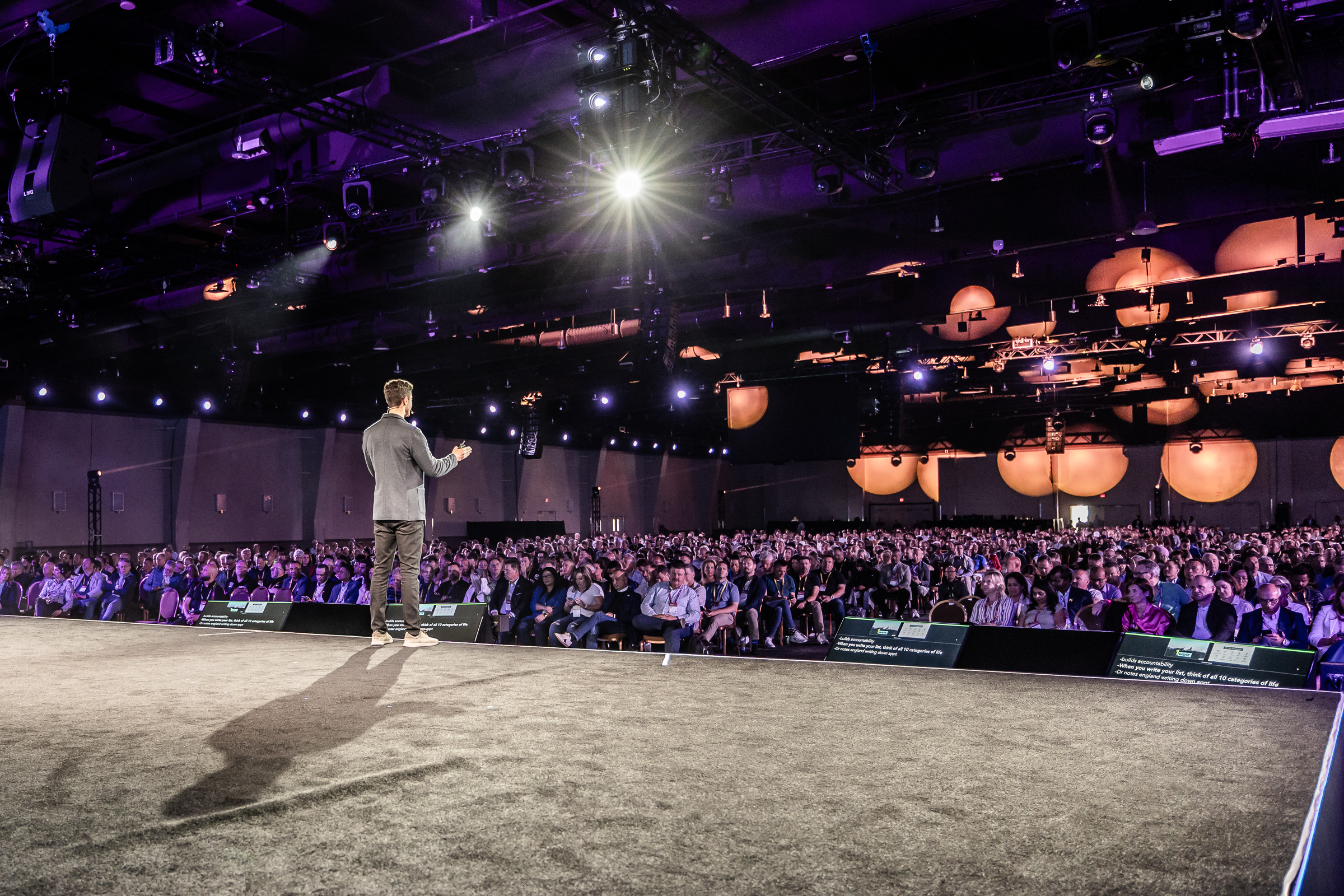
How does Vetter Event Group photograph a keynote or general session?
We work the general session as a room, not just a stage. Coverage starts before doors with clean frames of the empty hall, then attendees entering, because a room only looks full once, and only from the right angle. Speakers are photographed walking on and only while animated or gesturing, audience reactions get covered when the light lifts their faces, and we stay out of sightlines and never cross a projector beam.
Your Delivered Gallery
The speaker, the audience, and the scale of the room
A representative slice of a general session delivery, in the order it lands in your gallery. Not a highlight reel: the empty hall, the room filling, the stage, the scale, and the faces that prove people were listening, because that whole range is what you actually receive. Click any frame to see it full size.
In the final edit
The stage, the speaker, and the response
A keynote gallery needs to show both what happened on stage and how it landed in the room. We select for clear expressions, audience attention, and a sense of scale.
- A wide view that connects the presenter to the audience
- Speaker portraits with a purposeful gesture or expression
- Attentive faces and reactions that show the room listening
- Stage design and session context that remain clear in the frame
Coverage built around the main stage
- The speaker and the scale of the audience in one establishing frame
- Animated gestures and clear expressions for speaker and press use
- Audience reactions throughout the session, not just a view from the back
- Separate exposures for the bright stage and the darker hall
- Session signage and presenter-name slides to identify the delivered images
- Quiet movement that keeps aisles, sightlines, and projector beams clear
Before doors: the hall while it is still clean
We arrive early enough to photograph the room before a single attendee walks in. Clean wide frames of the hall, the full stage, the lighting design, the signage, and any special build your production team spent the night on. These frames exist for about fifteen minutes and they are the only record of the room as designed. It is also when white balance gets set and the stage light gets checked, so the general session is not the first time we meet it.
The walk-in, which is a shoot of its own
Attendees entering is a real coverage moment, not a warmup. We shoot them coming through the doors from inside the hall and from outside it, the full room from the front and from the back, and the candids that happen while people find seats: the greetings, the laughter, the reunion of two people who have not seen each other since last year. If there is an MC working the room, they get covered here too. This is the stretch that makes a general session look like an event rather than an auditorium.
The frame everyone actually wants
One image tends to carry the whole session, and it is the wide shot taken from near the stage looking back, holding the speaker or the screen and the audience in the same frame. It is what conveys scale, and it is the frame a marketing team reaches for first. We shoot it when the room is at its fullest and when the audience is lit enough to read, either by room lighting or by a bright slide throwing light back onto their faces. Timing it wrong produces a hall full of silhouettes.
A bright stage in a dark hall is two exposures
Stage lighting is built for cameras, which makes it far brighter than everything around it. Stage frames run at a relatively low ISO, and under bright stage light a smaller aperture keeps everyone up there sharp rather than just whoever is nearest. Audience frames are a completely different setting, exposed for faces and letting the background go bright. Anything with a screen behind it needs shutter speed adjusted so LED walls do not band, which is a fix applied on the night rather than discovered in the edit.
Speakers, shot while they are alive
Presenters get photographed walking up to and onto the stage, smiling, greeting the audience, and then only while they are animated or gesturing. A speaker mid-syllable with half-closed eyes is not a photograph of a speech, it is a photograph of a face. Shallow depth of field is welcome here, because a single speaker is exactly the subject it serves. Transitions between speakers, the handshakes and handoffs, get covered deliberately, since they are usually the warmest moments on stage.
Reaction is the other half of the room
An audience photograph is not filler. It is the evidence that the session landed. We shoot applause, laughter, leaning-forward attention, and the notes people take when something actually lands, and we weight the start of each session most heavily, because that is when a room is most responsive and most likely to be full. Shallow depth of field on a single reacting attendee is one of the most reliable frames in the hall.
Making the session findable later
Every session gets something photographed at its start that identifies it: a sign, the room placard, or the title slide. Any slide showing presenter names gets captured too, usually the first one. It sounds administrative, and it is the difference between a gallery your team can navigate a year later and one where nobody can remember which room a given photograph came from.
Staying invisible while doing it
The rule for working sessions is stealth. No walking in front of projectors, no moving through sightlines, no becoming visible or audible while somebody on stage is trying to hold a room. The team wears all black with quiet shoes and a name badge. Nobody in your audience should be able to describe the photographer afterward, which is the standard we hold ourselves to during the working part of the day.
When there is more than one room
Large programs run simultaneous stages, and the frames need to assemble into one timeline afterward. Every camera photographs TIME.GOV at call time, which syncs the bodies against an authoritative clock rather than whatever each one happened to be set to. The delivered set then sorts in true chronological order across every photographer, so the morning keynote, the concurrent tracks, and the closing session read as one day rather than three interleaved piles.
A keynote set your communications team can navigate
We do not overshoot. Volume is not coverage, and every frame captured is a frame that has to be culled and processed. In post we cull hard: no more than two versions of any near-identical image, and no more than three or four following a single moment on stage. Cards are never wiped on site, each camera runs two, and the backup copy stays intact until delivery. What comes back is a session someone can walk through: the empty hall, the room filling, the speaker at their best, and the faces that prove people were listening.
The Practical Details
Rates, paperwork, and the rest of the program
This page covers how the hall gets shot. The commercial and logistical details live where they belong.
Related Services
Explore connected event coverage
Common Questions
Frequently Asked
Can you get the speaker and the audience in the same photograph?
That's the frame we plan around. It's shot from near the stage looking back, holding the presenter or the screen and the room together, and it's timed for when the hall is fullest and the audience is lit enough to read, either by room lighting or by a bright slide. Shot at the wrong moment the same angle produces a room full of silhouettes.
Our stage is very bright and the hall is dark. How do you handle that?
As two separate exposures, because that's what it is. Stage frames run at a relatively low ISO for the bright stage light, with a smaller aperture so everyone on stage is sharp. Audience frames are metered separately, exposed for faces and letting the background go bright. Neither setting works for the other room.
Will your photographer distract the audience or the speaker?
No. Stealth is a written standard for working sessions: no crossing projector beams, no moving through sightlines, no becoming visible or audible while someone is holding a room. All black, quiet shoes, visible name badge. Nobody in your audience should be able to describe the photographer afterward.
There are large LED walls behind the stage. Will they band in photos?
Not if the shutter speed is set for them. LED walls and displays flicker at rates that produce banding at common shutter speeds, so shutter speed gets adjusted for those frames specifically. It's a known condition we plan for rather than something found in the edit.
What if the room isn't full?
We frame tighter and hold the wides. Empty chairs don't get photographed, and wide room shots wait until the hall has filled enough to earn them. That's also why the walk-in gets covered properly: attendees entering, greeting each other, and finding seats reads as energy in a way that an early wide of a half-empty hall never will.
Can you cover several stages running at the same time?
Yes, with multiple photographers under one lead and shared shot standards. Every camera photographs TIME.GOV at call time so the bodies are time-synced, and the delivered set assembles in true chronological order across the whole team rather than as separate piles you have to reconcile.
Do you photograph the slides and session signage?
Yes, deliberately. Something identifying each session gets shot at its start, a sign, a room placard, or the title slide, plus any slide showing presenter names. It's what makes the gallery navigable a year later when nobody remembers which room a photograph came from.
Do you photograph the room before the session starts?
Always. Clean wide frames of the hall, the full stage, the lighting, and the signage, shot before a single attendee enters. That's the only record of the room the way your production team built it, and it exists for about fifteen minutes.
Let's Scope Your Event
Tell us what you're planning and we'll respond within 24 hours with the next best step.
Get a Quote