Gala & Awards Photography
How We Photograph a Gala
A gala is the one event on your calendar where the most important thing that happens takes about four seconds. The handoff, the handshake, the honoree's face before they've composed it. There's no second take, so the whole night gets photographed as an approach to that moment. Here's how that night gets covered, in the order it happens.
How does Vetter Event Group photograph a gala or awards ceremony?
We photograph galas as a program with an unrepeatable moment inside it. The run of show is worked out in advance so the photographer is already in position when the award is handed over rather than moving toward it. Reactions matter as much as the presentation, so the honoree's table gets covered alongside the stage, and every grouping gets multiple frames so nobody is blinking in the one that gets printed.
Your Delivered Gallery
The awards, the atmosphere, and the celebration
A representative slice of a gala delivery, in the order it lands in your gallery. Not a highlight reel: the room before doors, the details somebody spent months on, the program, the portraits, and the celebration after, because that whole range is what you actually receive. Click any frame to see it full size.
In the final edit
Recognition, with the room around it
The award presentation is the center of a gala gallery, but the response gives it meaning. We build the selection around honorees, their guests, and the production that brought them together.
- A clear presentation frame with the recipient and award visible
- The applause, surprise, or pride around the honoree
- Formal group photographs with sharp faces and considered spacing
- Ballroom and table details that show the event design
- Celebration beyond the stage, from the reception to the dance floor
Ready for the recognition that happens once
- Award positions planned against the run of show before the program starts
- Honoree reactions and the response from their table covered with the presentation
- Group portraits checked for expressions, closed eyes, and clean backgrounds
- The finished ballroom and tablescapes photographed before doors open
- Stage and ballroom light handled separately throughout the program
- Sponsors and donors represented through both branding and guest engagement
Before doors: the room somebody spent months on
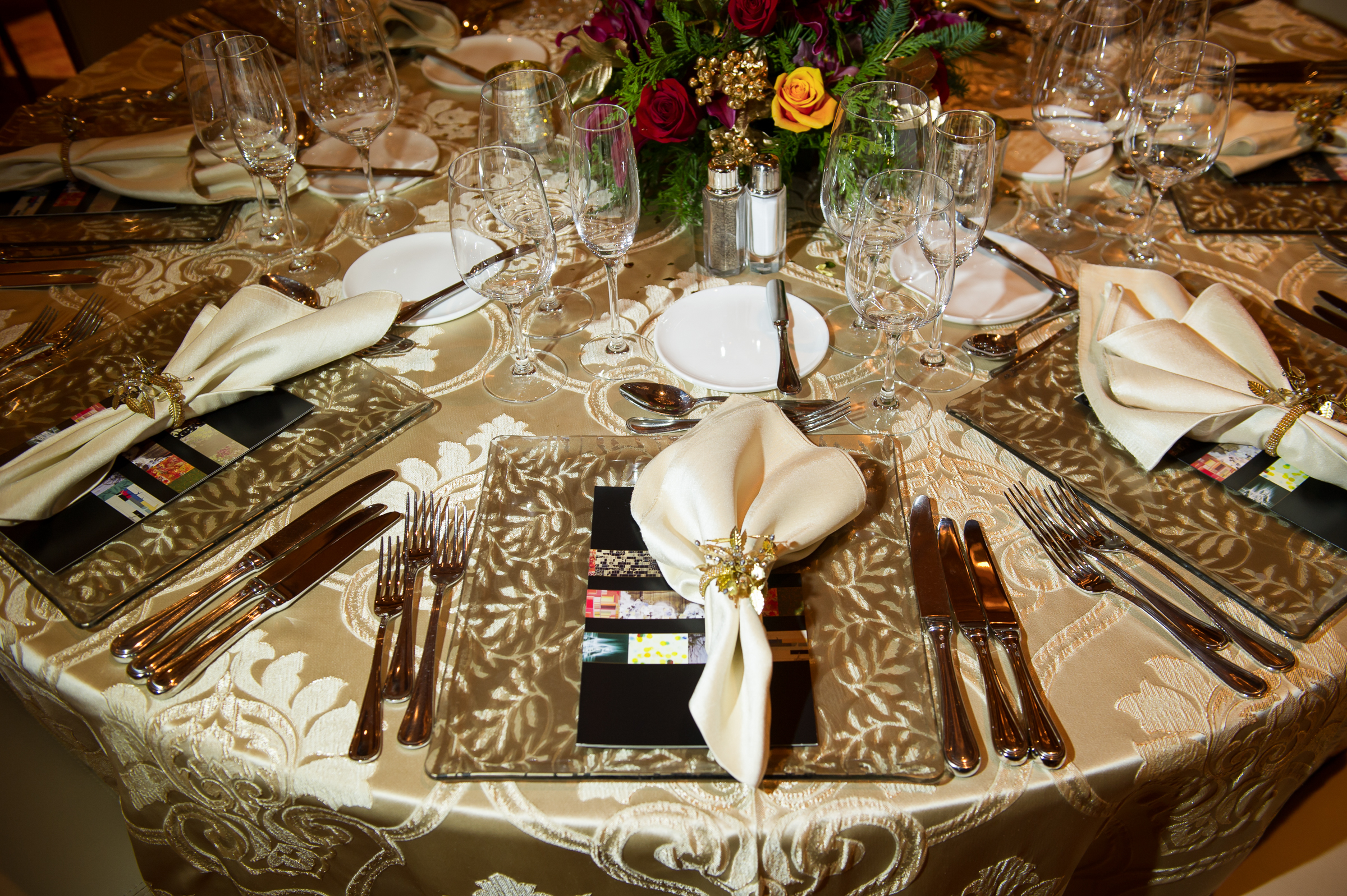
A gala room is a designed object, and it exists in finished condition for about fifteen minutes. Clean wide frames from the front and the back, the tablescapes before a napkin moves, the florals, the lighting design, the signage. Details get shot wide, medium, and macro, with distracting elements taken out of frame and any text sharp and readable. This is also when white balance gets set by hand for each space, since the ballroom, the foyer, and the cocktail area are three different lighting situations, and when the stage gets checked so the program isn't the first time we meet that light.
Arrivals: the one night everyone is at their best
People dress for a gala in a way they do for almost nothing else, and they know it. Arrivals and any step-and-repeat get covered while guests still look exactly the way they intended to, before the evening has worked on them. It's a short window and it produces the frames guests are most likely to want for themselves, which is its own kind of value: photographs people are glad to be in.
Cocktail hour: the room before it's seated
The reception before dinner is where the actual conversations happen, and it gets worked candid. Two people talking means both faces sharp, because a conversation only pulls a viewer in if they can read both of them, and people get placed in the scene with the room behind them rather than shot tight against nothing. Food and bar get photographed while displays are still full and untouched, never picked over, and nobody is photographed actively eating at any point in the evening.
The room, once it's full
Wide frames of a seated ballroom get held until the room has earned them. An empty chair in a gala photograph is a loud thing, so the wides come once the room is full: from the front, from the back, and the frames that show the stage and the audience together, which are the ones that convey scale. Shot too early, that same angle tells a story about a room that didn't fill.
The program: speakers at their most alive
Stage lighting is bright, which means stage frames run at a relatively low ISO while the rest of the room is a different exposure entirely. Speakers get photographed walking up and onto the stage, greeting the room, and then only while they're animated or gesturing, because a person mid-syllable with their eyes half closed is not a photograph of a speech. Transitions between speakers, the handshakes and the handoffs, get covered deliberately. On a stage under bright light, a smaller aperture keeps everyone in a group sharp rather than just whoever happens to be closest.
The moment that happens once
The award, the handoff, the announcement. It takes seconds and it cannot be staged again afterward without everyone knowing it was staged. That's the reason we work from the run of show rather than reacting to the room: the photographer is already positioned before the presenter says the name, with the angle chosen for the handshake and the recipient's face rather than the back of a head. It's the least improvised part of the evening on our side, precisely because it's the least repeatable part on yours.
Reaction is half the story
A photograph of someone accepting an award tells you what happened. A photograph of their table watching them accept it tells you what it meant. Attendee reactions get covered throughout, especially at the start of the program when a room is most responsive: applause, laughter, the honoree's colleagues turning toward each other. Shallow depth of field is welcome for a single reacting face, which is one of the few moments in the night where it's the right call.
Honoree and group portraits, done so they survive
Award recipients, boards, sponsor teams, and the leadership grouping all end up in front of the camera, usually with about ninety seconds to spare. Clean, uncluttered backgrounds and even spacing, and multiple frames of every single grouping, checked for closed eyes and for expressions. This is the frame most likely to be printed, framed, or run in an annual report, and it's the one that gets ruined by a single blink that nobody caught on the night.
Sponsors and donors, covered four ways
The people funding the evening need to see what they funded. Branded coverage runs on four distinct framings, because each is used differently afterward: a clean closeup of the branded item in good light, a wide frame placing it in the room, the branded item with engaged guests behind it, and engaged guests with the branding behind them. Any text in frame is shot sharp and readable. The last two are what a sponsorship or development team can actually put in front of a renewal conversation.
Dinner, and the celebration after
Dinner gets a light touch: full displays, table interactions caught with a long lens from a respectful distance, wide frames of a full room, and no one photographed mid-bite. Once the program ends the room changes character, and that's when the dancing, the drinks, and the unguarded conversations happen. Camera-aware frames become welcome here in a way they weren't during the program, and the evening ends on a warmer note than it started.
A gallery built around the honorees
We don't overshoot, because volume is not coverage and every frame captured is a frame that has to be culled and processed. In post we cull hard: no more than two versions of any near-identical image, and no more than three or four following one moment. Cards are never wiped on site, each camera runs two, and the backup copy stays intact until delivery. With more than one photographer, every camera shoots TIME.GOV at call time so the bodies are time-synced and the set assembles in true chronological order. What that produces is an evening someone can walk through: the room before anyone saw it, the arrivals, the program building, the moment, and the room afterward.
The Practical Details
Rates, paperwork, and related coverage
This page covers how the evening gets photographed. The commercial and logistical details live where they belong.
Related Services
Explore connected event coverage
Common Questions
Frequently Asked
The award presentation happens once. How do you make sure you get it?
By working from your run of show rather than reacting to the room. We know who is presenting, who is receiving, and which side of the stage they enter from, so the photographer is already in position before the name is announced, with the angle chosen for the handshake and the recipient's face. Where the moment is genuinely critical, a second photographer covers a different angle of the same handoff.
Our ballroom is dark but the stage is brightly lit. How do you handle that?
As two exposures in one room, because that's what it is. Stage frames run at a relatively low ISO for the bright stage light, and a smaller aperture keeps a full group on stage sharp rather than just the person nearest the camera. Room and audience frames are metered separately, exposed for faces, letting the background go bright.
Will people have their eyes closed in the honoree photo?
Not if we shot it correctly. Every grouping gets multiple frames, and they get checked on the night for closed eyes and for expressions before we release the group. It sounds obvious, and it's the single most common failure in awards photography, because posed groupings usually happen in a ninety-second gap when everybody is in a hurry.
Will flash disrupt the program?
Flash is used only where it's needed, and it's always bounced or modified rather than pointed at anyone. During the program the stage is usually lit well enough to work without it. When it does go on, it's for accurate color and catchlights, and it's shaped so the décor and the lighting design still look the way they were meant to rather than getting flattened out.
Can you photograph our sponsors and donors specifically?
Yes, on four distinct framings, because each gets used differently: a clean closeup of the branded item, a wide frame placing it in the room, the branded item with engaged guests behind it, and engaged guests with the branding behind them. Any text in frame is shot sharp and readable. The last two are the ones a development or sponsorship team can use in a renewal conversation.
Do you photograph the table decor and the room design?
Before doors, while it's untouched. Tablescapes, centerpieces, florals, lighting design, and signage get shot wide, medium, and macro, with distracting elements taken out of frame. Once guests arrive, that room stops existing in its designed state, so those frames have a fifteen-minute life.
Will guests be photographed eating?
No. Holding a plate or a glass is fine, and we keep food out of frame where we can, but nobody is photographed actively eating at any point in the evening. Table interactions get covered with a long lens from a respectful distance instead, which is also how you get a natural frame of a table rather than eight people looking up at a camera.
If you send two photographers, do the photos come back in order?
Yes. Every camera photographs TIME.GOV at call time, which time-syncs the bodies against an authoritative clock rather than whatever each one was set to. The delivered set then assembles in true chronological order, which matters when you're pulling the award sequence out of it later. Cards are never wiped on site and each camera carries a backup copy.
Let's Scope Your Event
Tell us what you're planning and we'll respond within 24 hours with the next best step.
Get a Quote